A new baseline
The guide was rewritten from the ground up for people who have never used Claude Code. This is the new baseline.
The headline
The guide has been rewritten end to end. This is the new baseline. Everything from this point on builds on this version, not on the original April draft.
Why
The original draft was technically accurate, but it was written for someone already comfortable with Claude Code. It used a pillar structure, yet it ended up with CLAUDE.md as the ninth pillar, even though it is the cheapest and most foundational piece of the whole setup. The new audience is people who have heard of Claude Code but never used it: friends, peers, the curious. They want a guide they can actually share without prefacing it with “you’ll need to skip the first half.”
What changed in the guide
First, the audience. The guide is now written for someone with zero Claude Code experience. A vocabulary primer comes up front, covering session, prompt, context, tool, agent, memory, skill, hook and CLAUDE.md, before any chapter expects you to know the terms. And Chapter 0 now walks through what you’ll need and a first session before the foundations begin.
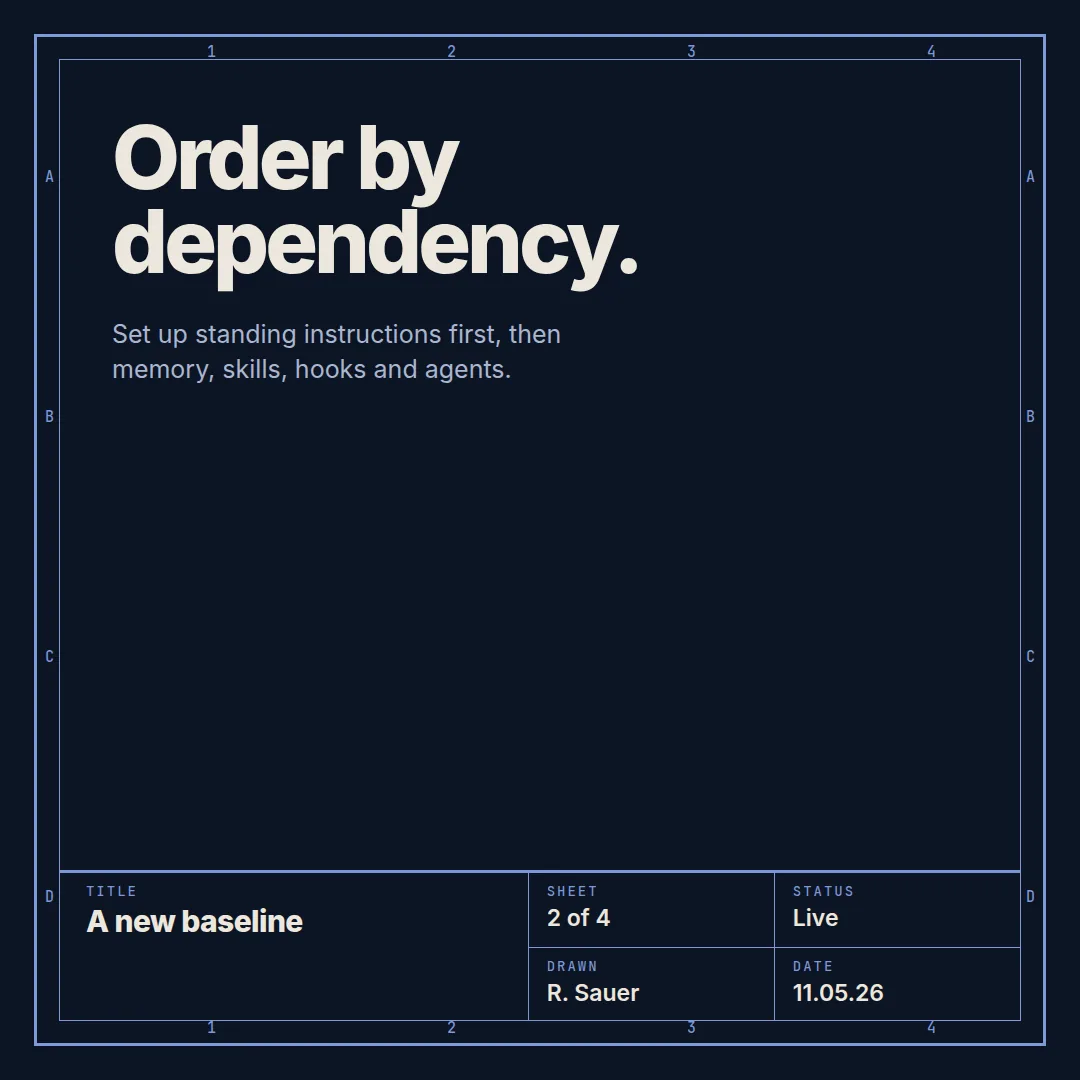
Second, the pillars have been reordered. The order now follows dependency: the cheapest piece first, then knowledge, then procedures, then enforcement, then specialists, then the composition patterns. So CLAUDE.md moves from ninth to first. Memory comes second, then skills third. Hooks and guardrails stay fourth. Subagents move to fifth, the persistence ladder to sixth, async and notifications to seventh, multi-agent patterns to eighth, and tool discipline closes the list at ninth.
Third, the format. The guide is full markdown, with tables, diagrams, code samples, and an annex prompt at the very end for spinning up a fresh AI session that already knows the guide.
Fourth, the guide is now a living document. Each week’s changes go into their own weekly update, and a rolling index lists the last ten weeks. The archive caps at ten weeks: older entries get summarised down to a single line and the full write-up rolls off. The point is that someone who reads the guide in week three and comes back in week seven only needs to scan the index, then open the two or three weekly updates that look load-bearing for them.
And what stayed. The worked examples, the doctoral thesis, the freelance writer, the urban planner and the rest, are all still here; they remain the strongest part of the original guide. The decision rules in each chapter, about when to use CLAUDE.md versus memory versus a skill versus a hook, are preserved and tightened. And the closing advice to build incrementally is unchanged.
Housekeeping
A note for anyone who read the old draft. The old per-pillar files are no longer the canonical source. Treat the full written guide as the single source of truth. The old foreword and synthesis chapters are folded into Part 1 and Part 4 of it. And the update routine still applies: small, targeted edits to the current guide, each logged in a changelog and rolled up into the weekly update every Monday.
The full guide is at claude-guide.sauer.com.au/full-guide/.
The cards